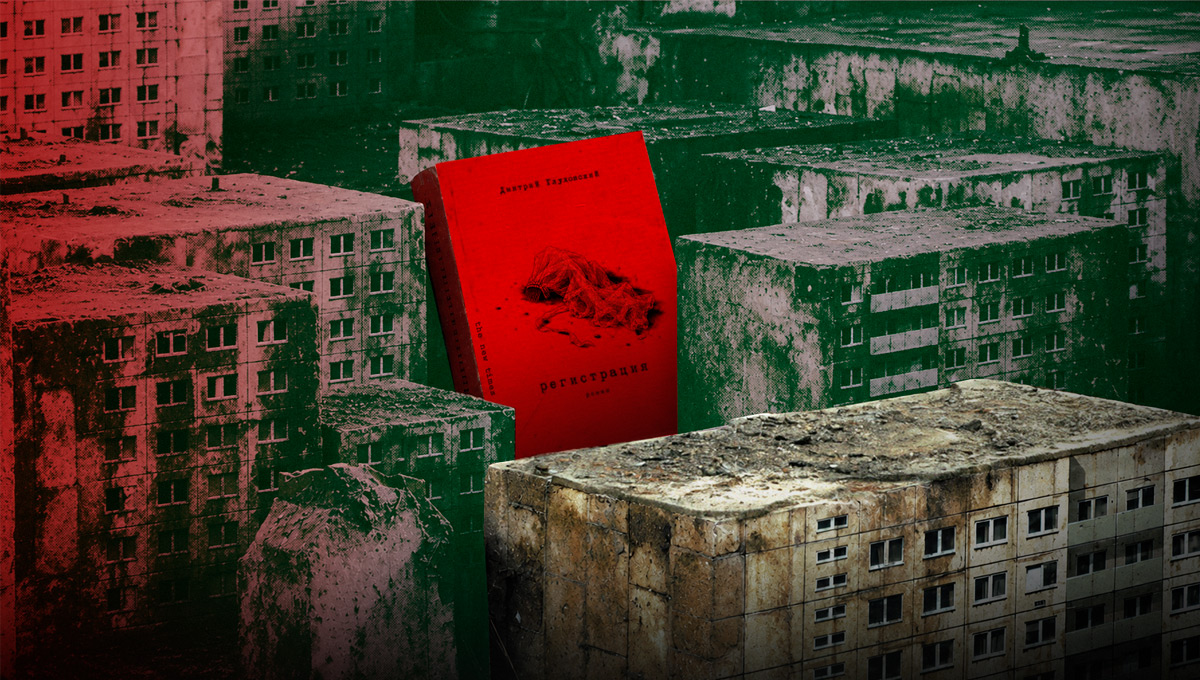
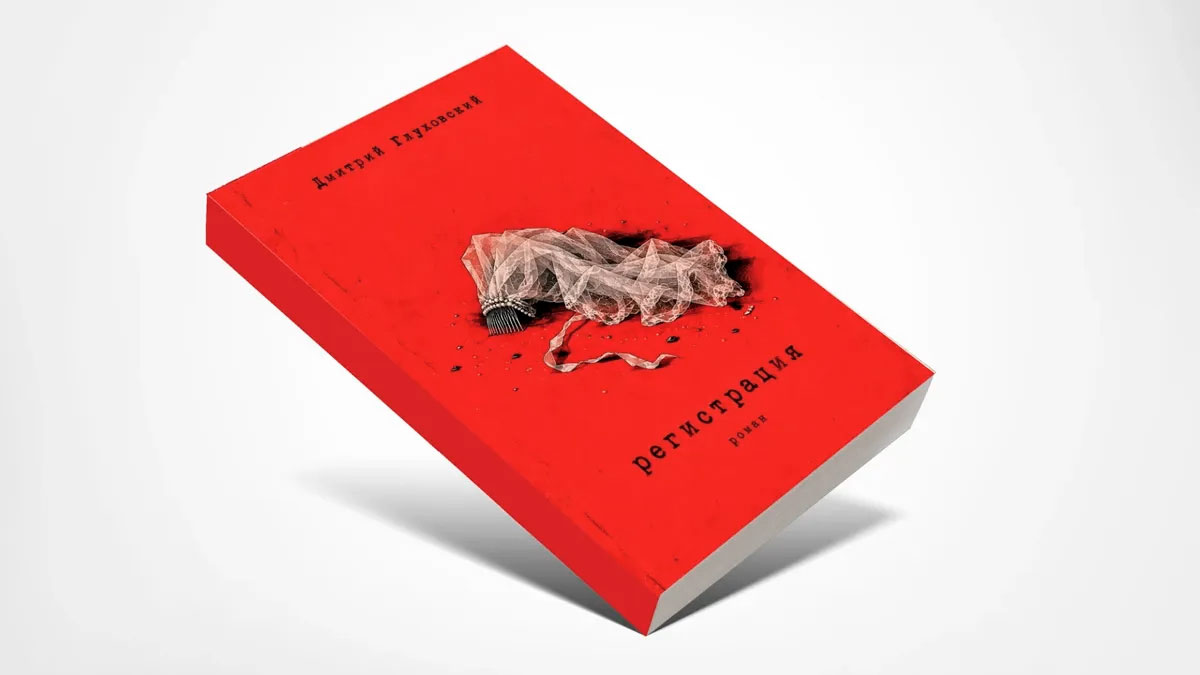
 I don't know if I would have read «Registration» if the book in fifteen parts hadn't been narrated by Matvey Ganapolsky*. In fact, for someone who has traveled a lot through provincial Russia, as I did by car (see, for example, newtimes.ru/articles/detail/206279) and read a lot about what drives people to become mercenaries, to kill Ukrainians for money, there's nothing new in «Registration». Katya Gordeeva made several documentaries with mothers of missing sons — there are many details; stories about how wives bring their drunken husbands, incapable of anything, including any kind of nightly pleasures, to enlistment points to sign contracts, how mothers bring their sons to military offices, believing the army will save them from drugs and they, if not alive, then dead, will bring several million to the family budget; how wives and mothers desperately fight for funeral payouts — many such stories have been written and told over these terrible four and a half years of war.
Why are Russians so willing to kill for money? — Basically, for the same reason Indians or residents of various African countries (40 thousand, I read, serve or served in the Russian army in Ukraine), or North Koreans enlist in the Russian army — it's a chance to change the routine of an unappealing life, to escape poverty. Over two million rubles upon signing a contract plus 240 thousand monthly — compared to twenty or even forty thousand rubles a month (which are the salaries in the provinces) — the difference is significant. Killed? Well, if killed, there's little good to remember from the past life.
It's not that only the very poor become mercenaries — more than two million Russians have passed through or died on the front. An ordinary person in Russia has never lived as well as in 2003–2013, when trillions of oil money flowed into the country. But Glukhovsky wrote, and Ganapolsky managed to highlight something else — the lack of rights, humiliation, and the senselessness of Russian life.
I remember how in Samara a colleague from Samara's «Echo» took me to the poorest area of the city. We entered one of the wooden barracks, on the front of which it was written that the house had been preparing for resettlement since the early 1980s. The residents — I spoke with them — wrote about their hard life to Brezhnev, and since Brezhnev's times, they were promised resettlement, new apartments. But they still live in apartments where holes in the ceiling are plugged with boards, and the ceiling is supported by additional props, sometimes ceilings collapsed on those sleeping. I then asked (summer of 2021), did you write to Putin? Yes, we did. And? — They replied from his administration, promised. And? — Nothing. Decided not to vote for them anymore. Did you protest? — No, not up to that.
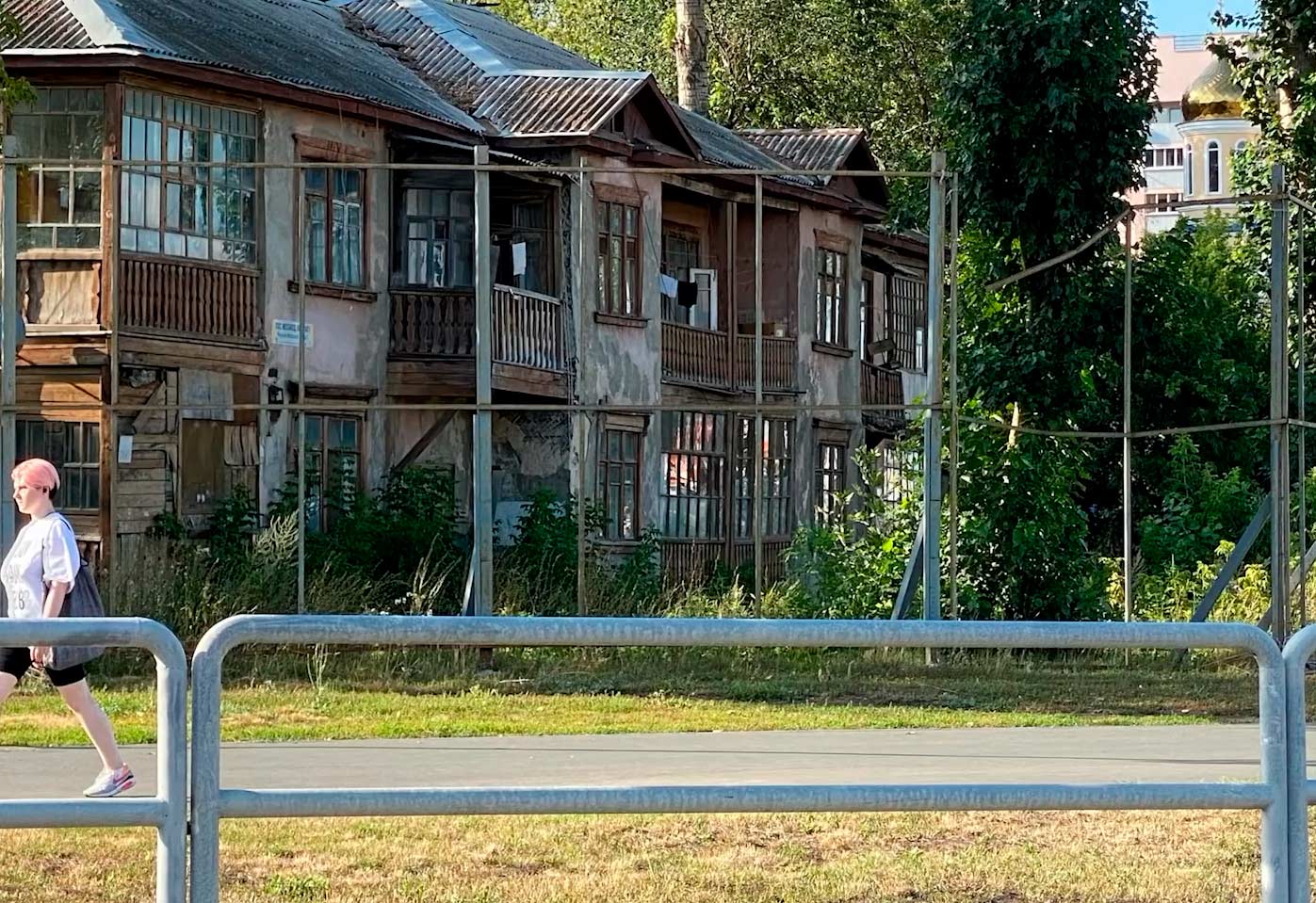
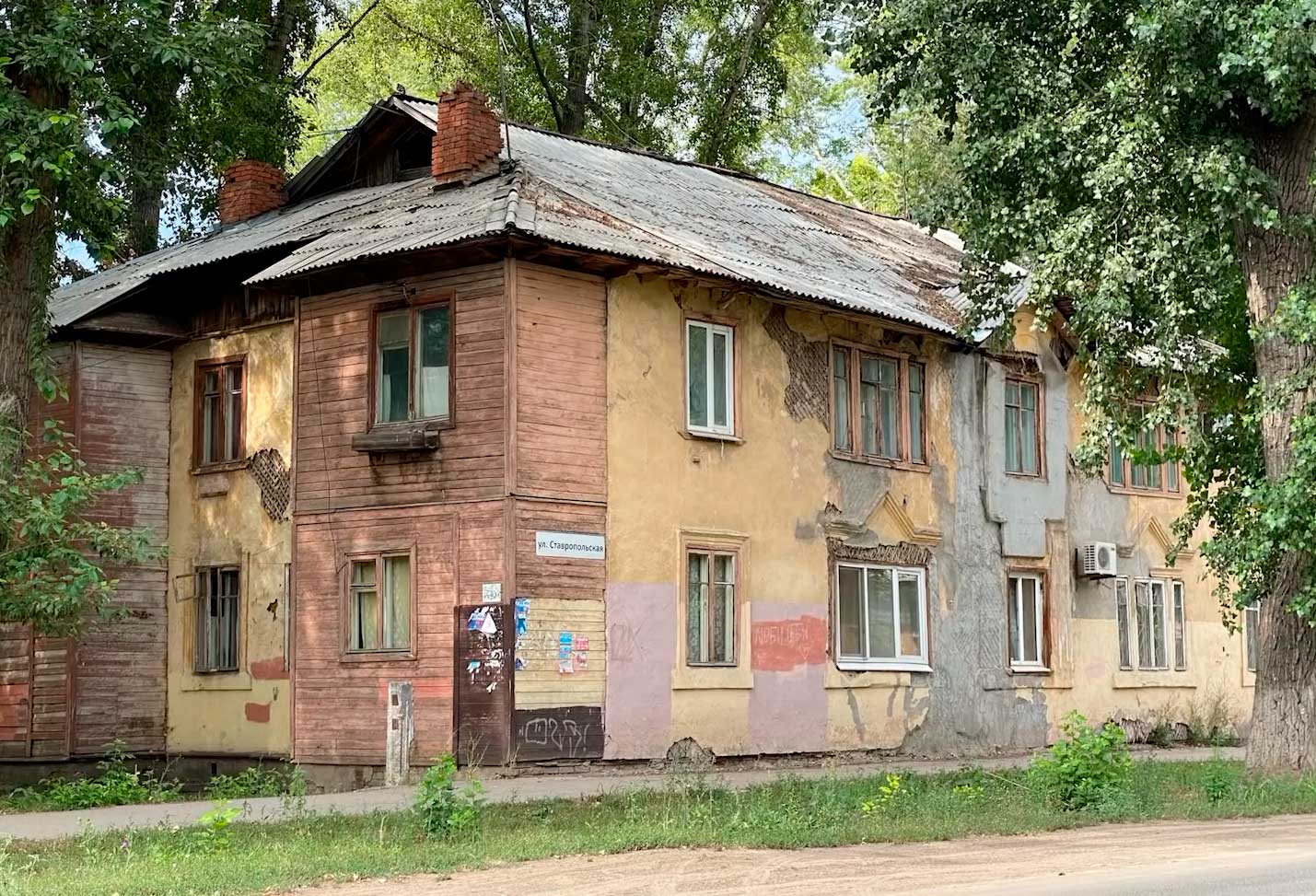
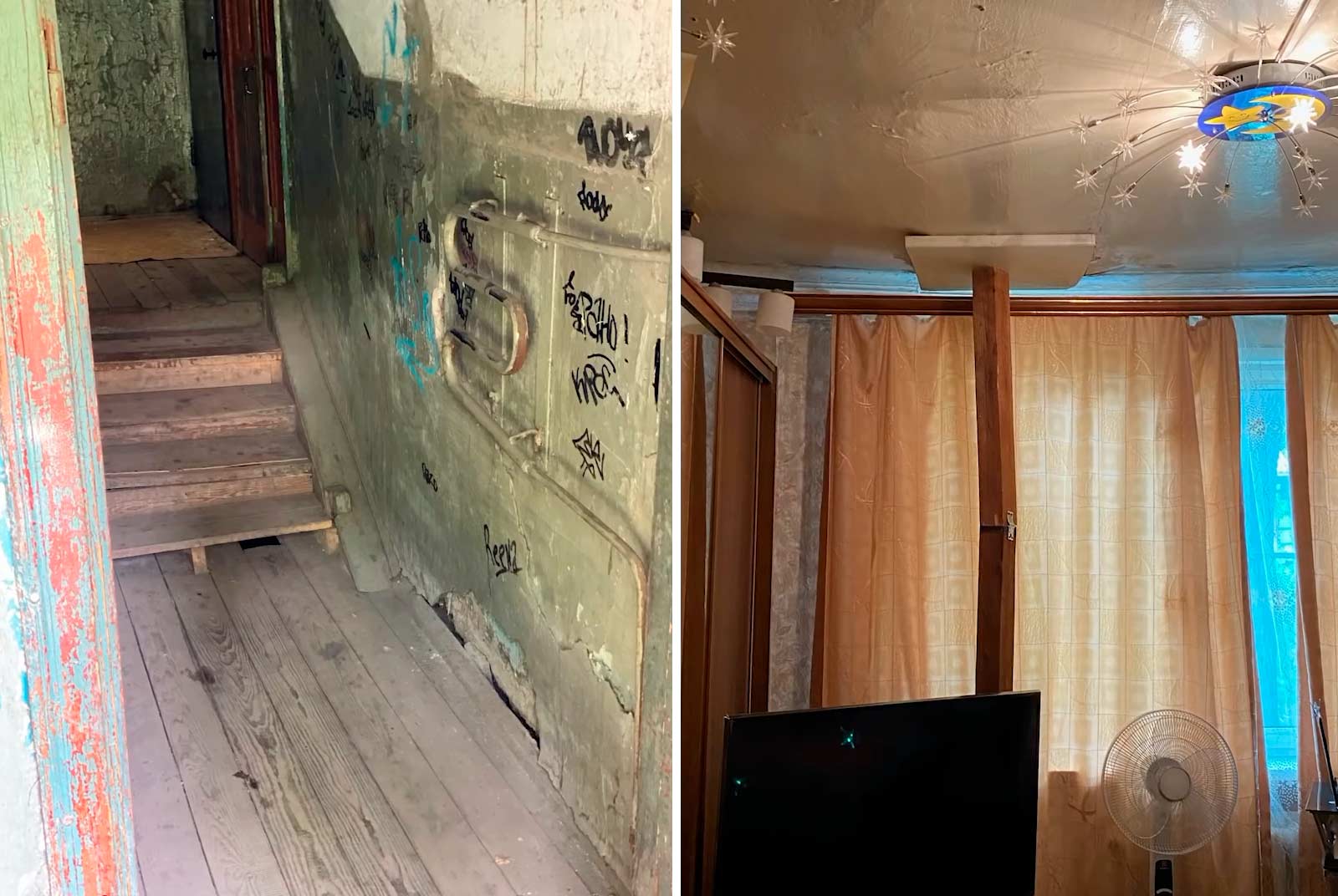
Barracks in Samara. Bezimianka and Metallurg districts, 2021. Photo: E. Albats
This helplessness of Russian life, centuries of lack of rights, whether under the tsar, communists, liberals, or security officers, the absence of any light at the end of the tunnel — this is what I think drives people to the army, to kill. At least some goal, at least some business, at least some camaraderie, in the end — at least some power, if not over their own life, then over someone else's.
One of the strongest plots of Ganapolsky's performance — and Matvey created exactly a 15-act play based on Dmitry Glukhovsky's novel — is Ulyana's delight in finding a mechanism to influence those who see nothing in her. Absolutely nothing. Emptiness. A piece of meat. In fact, there's not much to see in her. A vulgar woman, without knowledge, without faith, such words as «values» cannot even be uttered near her. But Ulyana, with a sixth sense, understood where the source of power in the country is, — in the FSB, and if you lean slightly, sideways, against this powerful institution, write a denunciation, then part of the power of this «shield and sword» kind of transfers to her, to Ulyana. And with this power in her purse, she can overcome those who otherwise wouldn't even sit on the same bench with her, if she doesn't have a million for a bribe. True, it's not very clear who suggested to Ulyana that a denunciation is her weapon, including against the relatives who gave her a bed and food. Did she figure it out herself? Read it on the internet? We don't think she read about Stalin's times when denunciations became a tool for improving housing conditions or getting rid of a hated husband.
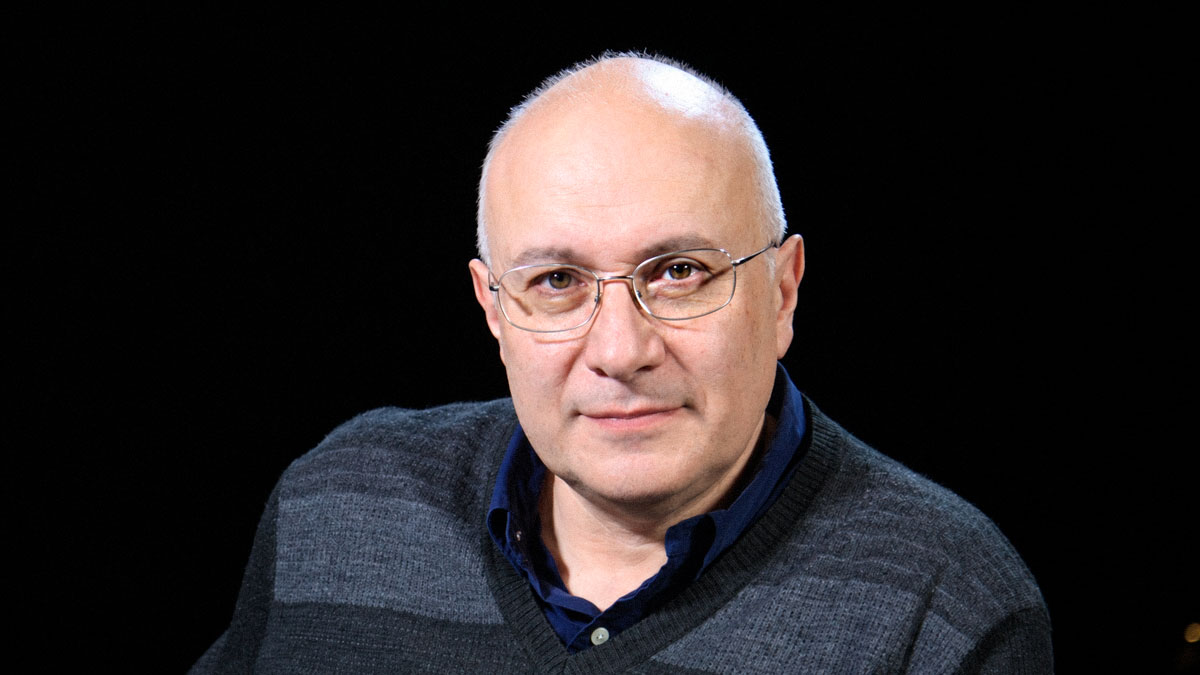
Matvey Ganapolsky. Photo: Radio Liberty (RFE.RL)
Ganapolsky doesn't just read «Registration» — he creates a performance with his voice, chuckles, fingers covering his face — as if to say, my God, it would be better not to know or see any of this. He makes the characters, not always well-written by the author, whose evolution from ordinary people to monsters happens suddenly, steps are skipped, as if someone casually poured a bucket of filth on a white wall, but who and why is unclear — alive, real, terribly disgusting. It's harder with those characters who are less repulsive — Marina and Maxim, Ulyana's relatives, with whom she lives while visiting her Sasha in the hospital and on whom she writes a denunciation, either extorting money from them or out of ordinary envy of a person who found themselves from provincial squalor in a decent average metropolitan family. They are flat, like a woman after a mastectomy, everything is clear about them in advance, classic mattress-stuffers, against the war, but only in their kitchen, for all good against all bad, until the bad touches them with its wing, fellow travelers — not fellow travelers, faceless characters. Director Ganapolsky doesn't even try to make them better than Ulyana, at least she has individuality, and these are just dead fish.
What Ganapolsky does brilliantly is the wedding scene in the ward of a Moscow region military hospital of the dying soldier Sasha Lazarenko with Ulyana, who is pregnant by him and already calculating what can be bought with the money for Sasha's injuries (he lost both legs). Ulyana, through a denunciation that the doctors are demanding a million rubles from her to quickly register her with the dying Sasha, forces the resuscitators to bring Sasha out of postoperative coma for twenty minutes. They not only remove sedation but also painkillers, and during this time the lady from the registry office utters her meaningless words about a new cell of society. Everyone is good here, the doctors, the lady, and the wounded soldiers, one without an eye, another without a leg, all understanding, cynical, indifferent scoundrels.
But the main character here is Sasha, and in the last hour of his life, he suddenly turns into a positive hero — he is tormented by horror from what he did there, at the front, he keeps trying to tell Ulyana what terrible things he did there and why it's so hard for him to die — the repentance of a dying boy who went to war because his mother took him (his mother needed money for a cottage), and also because now the cops won't dare to mock him, a special forces soldier, like they did before the war, — this need of his to tell, to confess, to ease his soul and thus acknowledge his terrible sin — Ganapolsky with his voice, facial expressions makes this scene incredibly powerful and utterly hopeless. Because no one needs Sasha's truth, and no one wants to listen to him, and he dies inside his own internal hell. Maybe this is the only thing that can stop people — the horror of dying in hell without the ability to share this nightmare with loved ones.
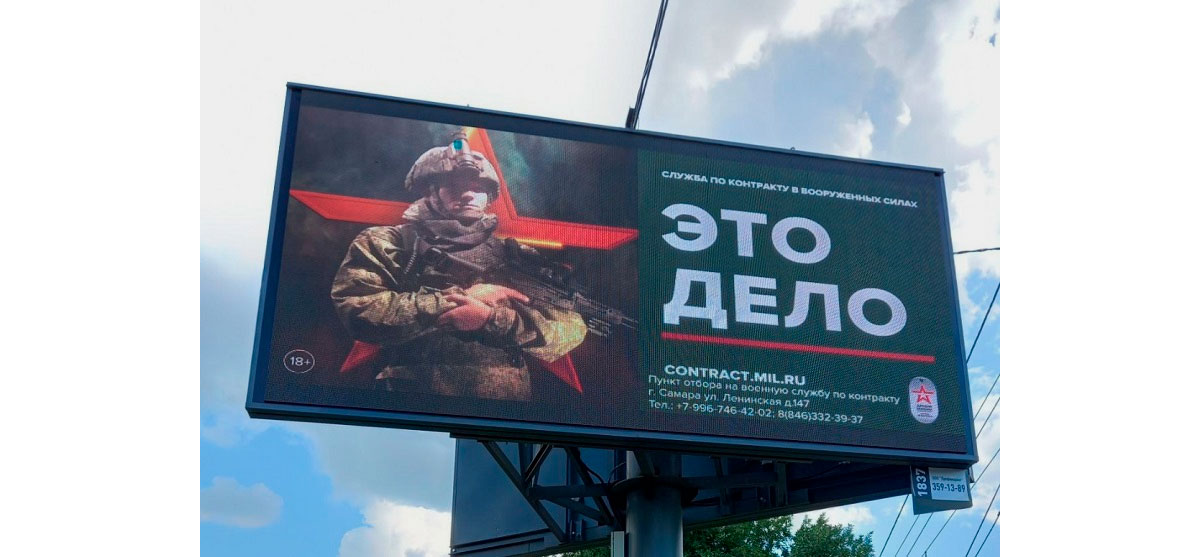
Billboard advertising contract service in the Russian army near a psychiatric hospital in Samara, 2022.
A life devoid of meaning and purpose, except for daily survival; absolute helplessness in the face of any authority, or wealth, or just someone unhinged, like the man who came for a «full body» (underlined) massage at the «At Ulyana's» massage parlor, which the widow bought with Sasha's funeral money — and she, for five thousand (plus ten — tips), leaves her beloved friend Kristina at his mercy; the lack of rights of people who don't even realize the depth of their lack of rights and, not understanding the words spoken to them, thank the state that killed their son for making his early end and their own existence meaningful (plus new housing) — these guts of Russian life Glukhovsky pulled out, and Ganapolsky placed at the center of the novel «Registration».
* Yevgenia Albats, Matvey Ganapolsky, Dmitry Glukhovsky have been declared «foreign agents» in Russia.